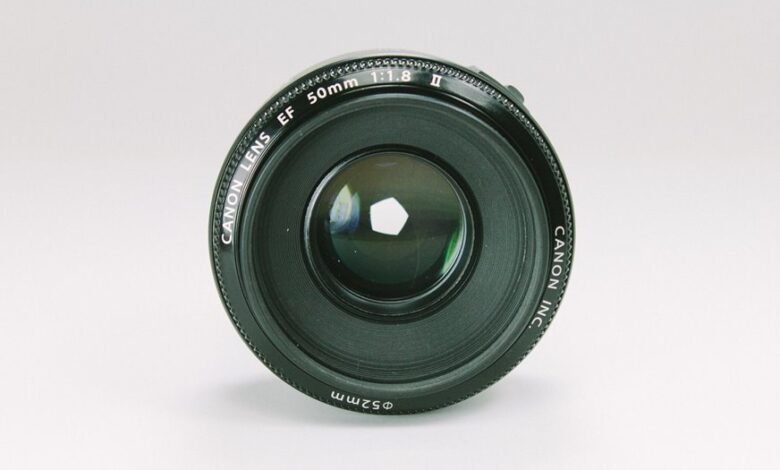
Focal length is not a fixed property alone; it shifts with design, distance, and path alterations. Prime versus zoom, internal versus external focusing, and optical elements govern baseline values. Real-world factors—focusing distance, adapters, extenders, and magnification—reshape effective focal lengths. Environmental conditions and manufacturing tolerances further skew dispersion, coatings, and spacing. These influences touch depth of field, perspective, exposure, and autofocus behavior, leaving a nuanced landscape where precision must be maintained as variables accumulate. The implications for field results invite closer scrutiny.
What Exactly Is “Focal Length” and Why It Changes
Focal length is a measure of how strongly a lens converges or diverges light, defined as the distance from the lens’s optical center to the point where parallel rays would converge (the focal point) in image space.
The focal length can vary with focus distance and lens accommodation, affecting magnification and perspective.
Exposure adjustment interacts with this, influencing perceived sharpness and depth.
How Lens Type, Design, and Zoom vs. Prime Affect Focal Length
Lens type, design, and the choice between zoom and prime lenses define how focal length is established and utilized in practice.
The discussion centers on lens characteristics and how design tradeoffs shape usable focal ranges, image consistency, and optical performance.
Zooms offer flexibility but may introduce compromises in maximum apertures; primes deliver purity and situational clarity.
Selection reflects technical goals and freedom of creative pursuit.
Real-World Influences: Focusing Distance, Adapters, and Extenders
Real-world factors such as focusing distance, adapter use, and extenders directly alter effective focal length, field of view, and optical performance.
In practice, focus distance governs magnification and perspective, adapters modify flange distances, and extenders add optical elements altering light paths.
These real world influences require careful calculation, documenting reductions or gains, and understanding how accessory combinations shift theoretical focal length versus realized imaging outcomes.
Environmental Factors and Manufacturing Tolerances That Shift Perception
Environmental factors and manufacturing tolerances introduce deviations between designed and perceived focal characteristics that are not driven by user technique or accessories.
Environmental tolerances influence refractive behavior and thermal expansion, altering effective focal length.
Manufacturing deviations arise from variances in glass dispersion, coating thickness, and element spacings.
Together, they induce measurable shifts in perception, demanding rigorous calibration and documentation of optical performance deviations.
Practical Implications: Depth of Field, Exposure, and Stabilization in the Field
The practical implications of focal length variability manifest most clearly in depth of field, exposure, and stabilization during field use. Variations alter perceived plane sharpness, requiring deliberate aperture and distance planning.
Fluctuating focal length challenges exposure stability, demanding compensation from the photographer’s technique or equipment.
In-field tolerances influence autofocus behavior, ruling out passive setups in dynamic environments.
Frequently Asked Questions
Do Zoom Ranges Affect Image Sharpness Across the Frame?
Zoom ranges can influence image sharpness; variations occur across the frame, often showing softness at edges. Chromatic aberration symmetry may mirror focal length behavior, with mid-range settings typically balancing central sharpness and peripheral consistency.
How Do Sensor Size and Crop Factor Impact Focal Length Perception?
Whispers of light bend like a trail of glowflies; sensor size and crop factor redefine perceived focal length, altering field of view. Larger sensor, smaller crop factor—perceived focal length shorter; smaller sensor, larger crop factor—perceived longer.
Can Focal Length Change With Different Aperture Settings?
Aperture can influence apparent focal length due to lens design; however, true focal length remains constant, showing aperture dependence only in magnification and proofing. In practice, focal length stability is maintained across typical aperture ranges.
Do Autofocus Motor Type Influence Effective Focal Length in Use?
The answer: No, autofocus motor type does not change a lens’s intrinsic focal length; it may affect focusing speed. Allegorically, a steady oar steers a boat, while lens mount compatibility determines whether the oar fits the boat. autofocus motor, lens mount compatibility.
How Do Diffraction and Pixel Pitch Alter Perceived Focal Length?
Diffraction and pixel pitch subtly reshape perceived focal length by altering image sampling and angular resolution; diffraction widens the point spread, while larger pixel pitch reduces sampling density, collectively shifting effective magnification and the apparent focal length in practical imaging. diffraction effects, pixel pitch
Conclusion
Focal length is not a fixed value; it shifts with design, configuration, and environment. Primarily, lens type, zoom mechanics, and prime Optics establish the baseline, while focusing distance, adapters, extenders, and mounting geometry modulate effective length. External factors such as temperature, tolerances, and coatings subtly alter light paths and dispersion. Practically, these variables ripple through depth of field, perspective, exposure, and stabilization, much like a compass whose needle dances with every magnetic whisper.